

 Image 1 of 2
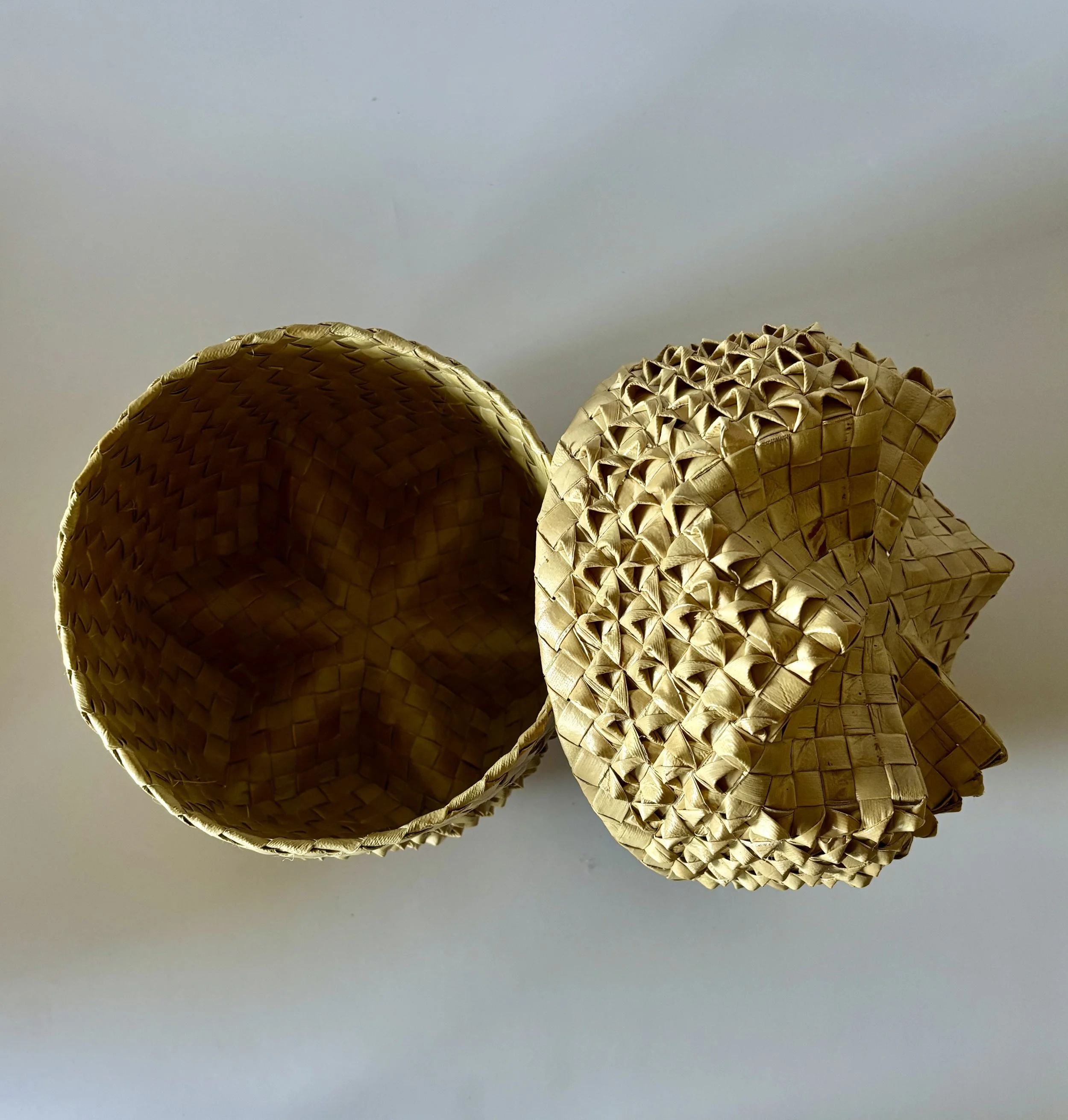 Image 2 of 2
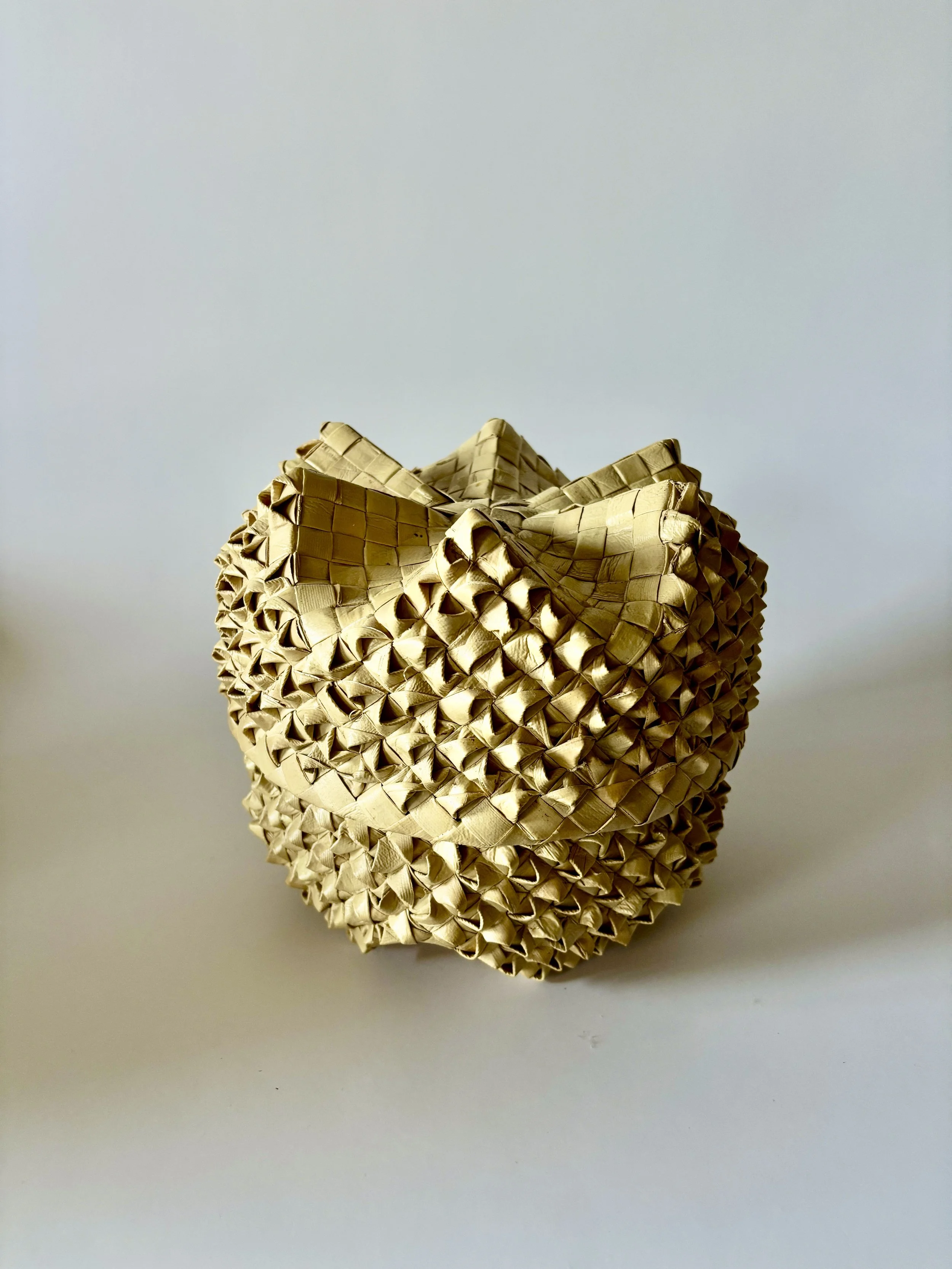
This sculptural lidded basket is hand crafted from the North Pacific, Hawaiian Islands, ca. early to mid 20th century CE. It’s a stunning hand-woven lidded basket made of fibrous lauhala fronds. The exterior has a wonderfully textured weave and a 6-pointed star shaped lid and base. The body rests on the tips of the 6 points, and the walls rise upward to a rim that does not have the spiked folds, so the lid can fit in place. The "thorny" exterior extends from the body to the lid. This basket would have taken many hours to complete the complicated twisted and folded weaving that creates the ridged surface. Lau means "leaf" and Lauhala translates to leaves from the hala tree. Lauhala was an invaluable material for Hawaiians - everything from buildings, bedding, clothing, and boat sails - was made from these fronds'Lau' means leaf in this case from the 'Hala' tree. The hala tree is of great cultural, health and economic importance in many Pacific Islands.
This sculptural lidded basket is hand crafted from the North Pacific, Hawaiian Islands, ca. early to mid 20th century CE. It’s a stunning hand-woven lidded basket made of fibrous lauhala fronds. The exterior has a wonderfully textured weave and a 6-pointed star shaped lid and base. The body rests on the tips of the 6 points, and the walls rise upward to a rim that does not have the spiked folds, so the lid can fit in place. The "thorny" exterior extends from the body to the lid. This basket would have taken many hours to complete the complicated twisted and folded weaving that creates the ridged surface. Lau means "leaf" and Lauhala translates to leaves from the hala tree. Lauhala was an invaluable material for Hawaiians - everything from buildings, bedding, clothing, and boat sails - was made from these fronds'Lau' means leaf in this case from the 'Hala' tree. The hala tree is of great cultural, health and economic importance in many Pacific Islands.